April 10, 2026
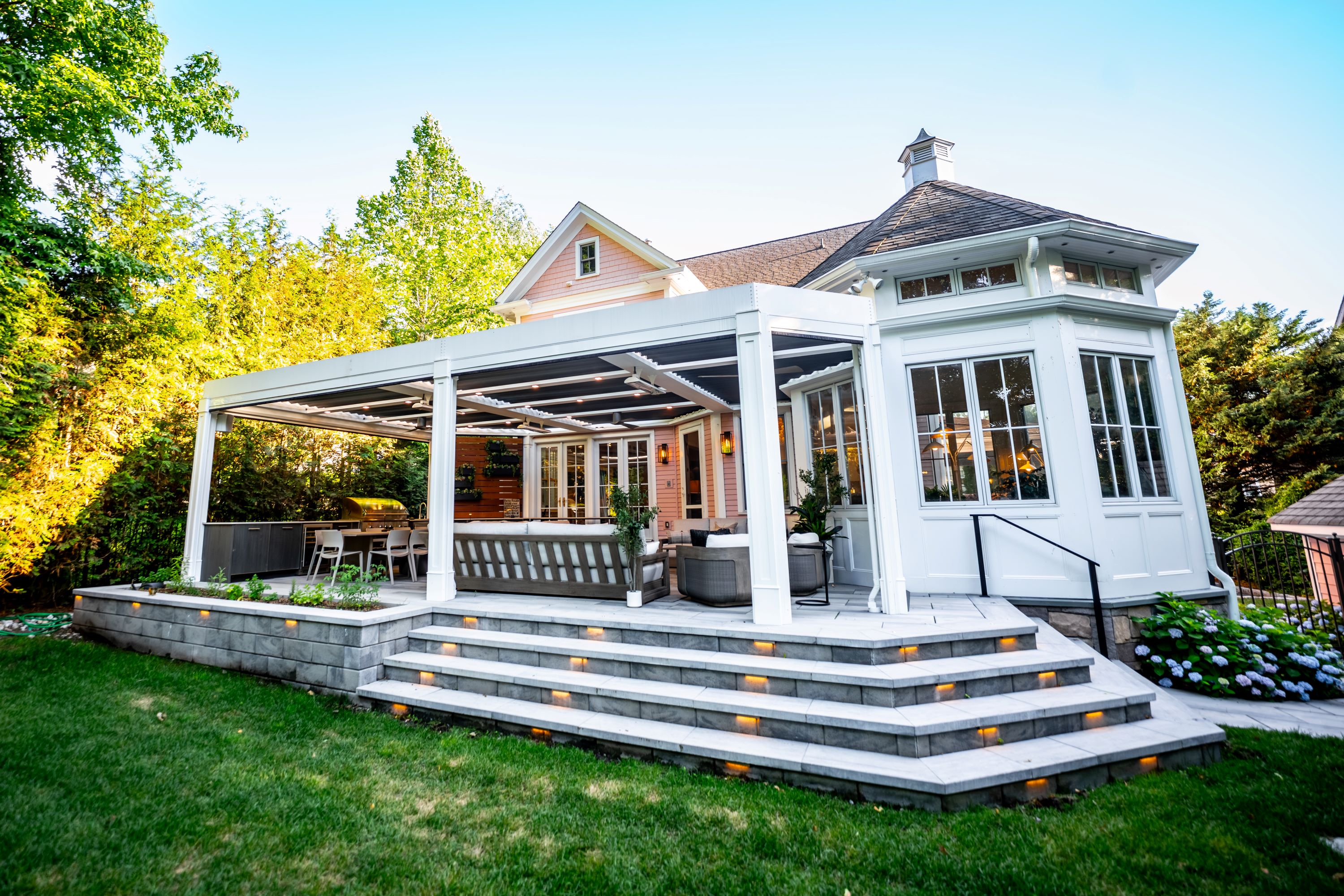
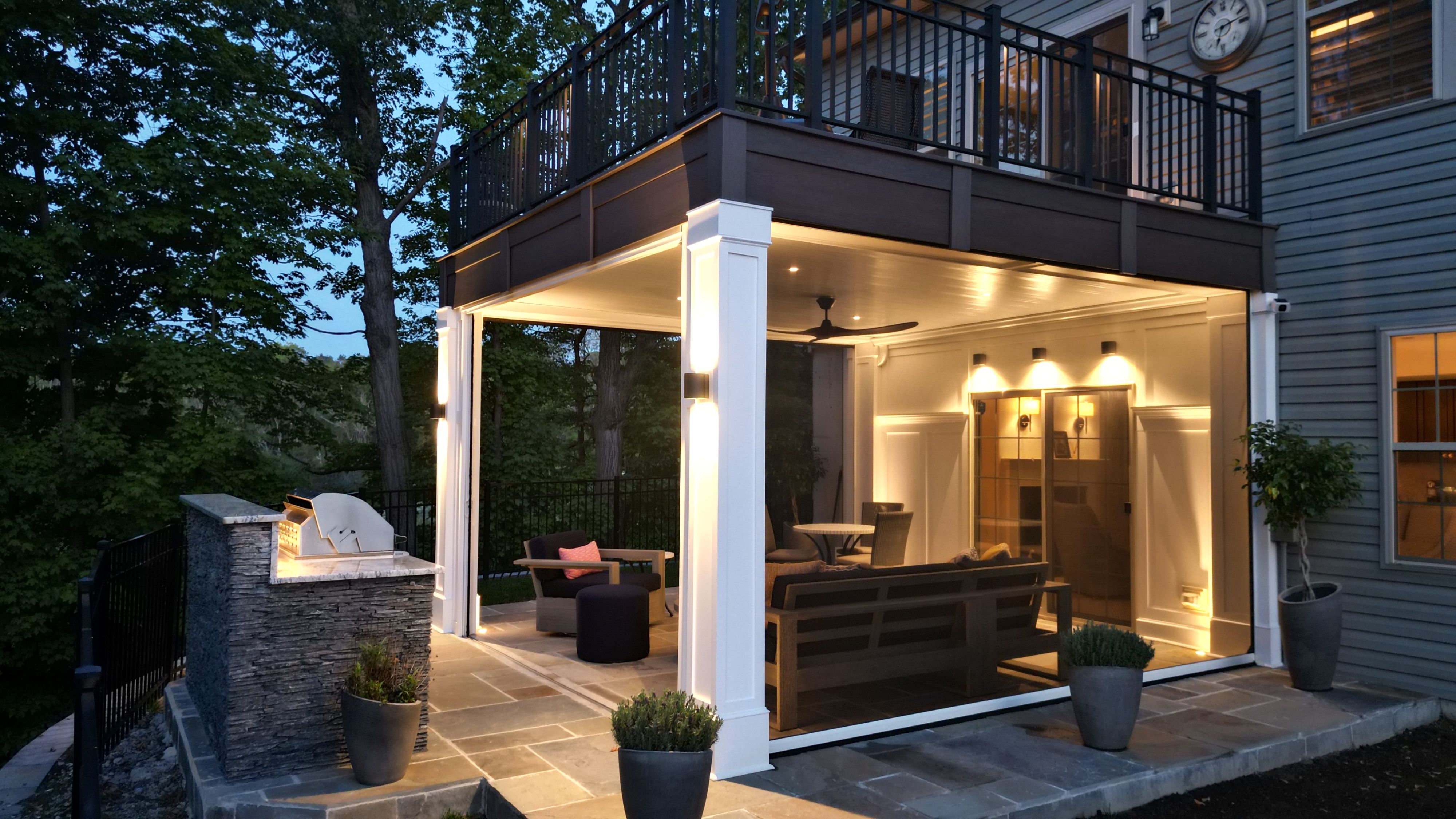
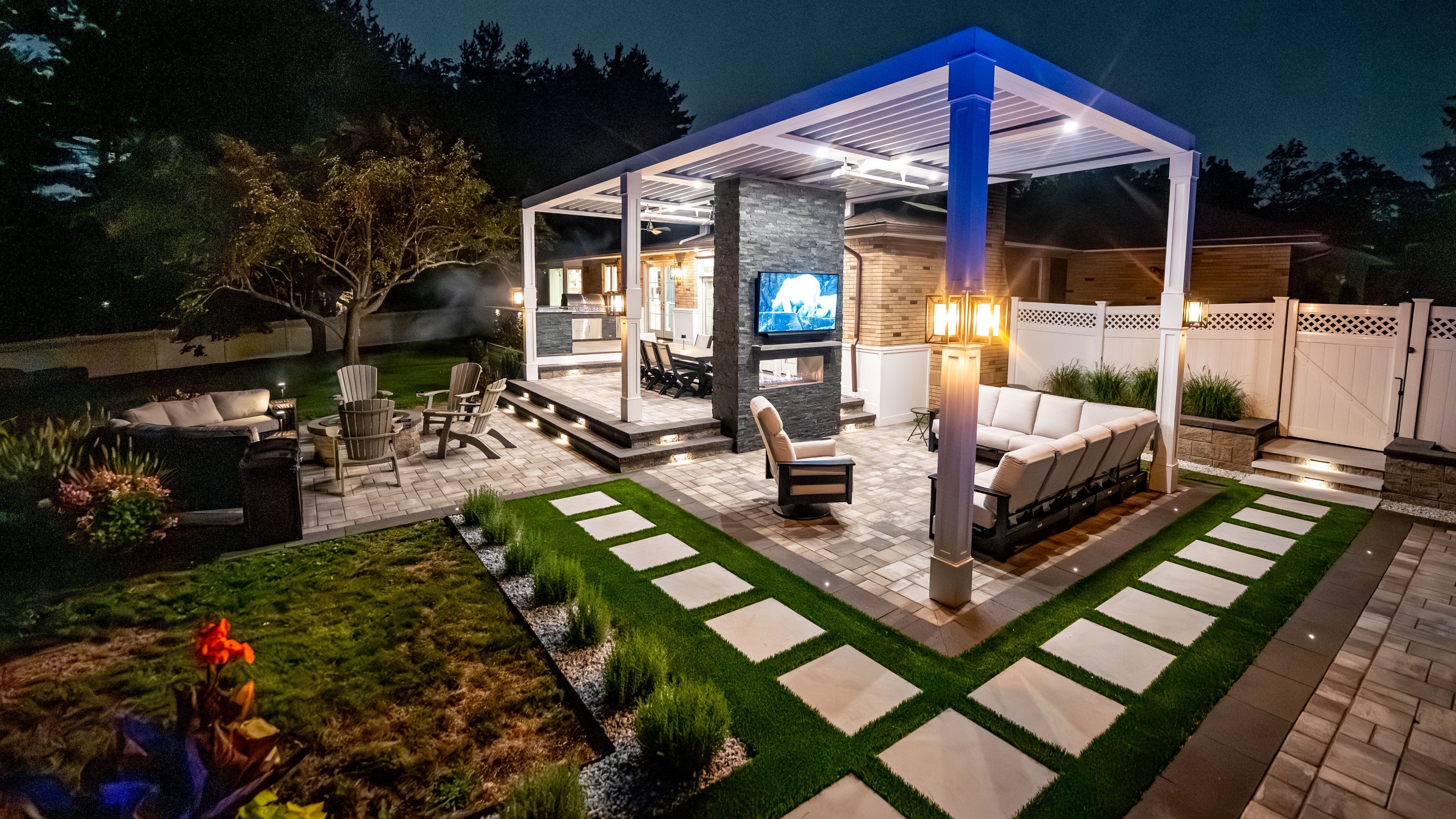
Over the past few years, outdoor spaces have started to feel a lot less like an afterthought and a lot more like an extension of the home itself. What used to be a simple deck with a grill and a few chairs is now expected to do a lot more. Homeowners are eating outside, hosting, relaxing, and spending entire evenings in these spaces in a way that just wasn’t as common before.
That shift has exposed a common problem. When everything is pushed into one open area, the space starts to compete with itself. Dining blends into lounging, traffic cuts through where people are trying to relax, and nothing really feels like it has a clear purpose.
That’s where the idea of a multi-zone outdoor living space comes in. Instead of treating the deck or patio as one big, undefined area, it’s designed with intention. Different parts of the space are created for different uses, allowing everything to function better without feeling crowded or disconnected.
When it’s done right, it doesn’t feel segmented or forced. It just feels like a space that naturally works the way you want to use it.
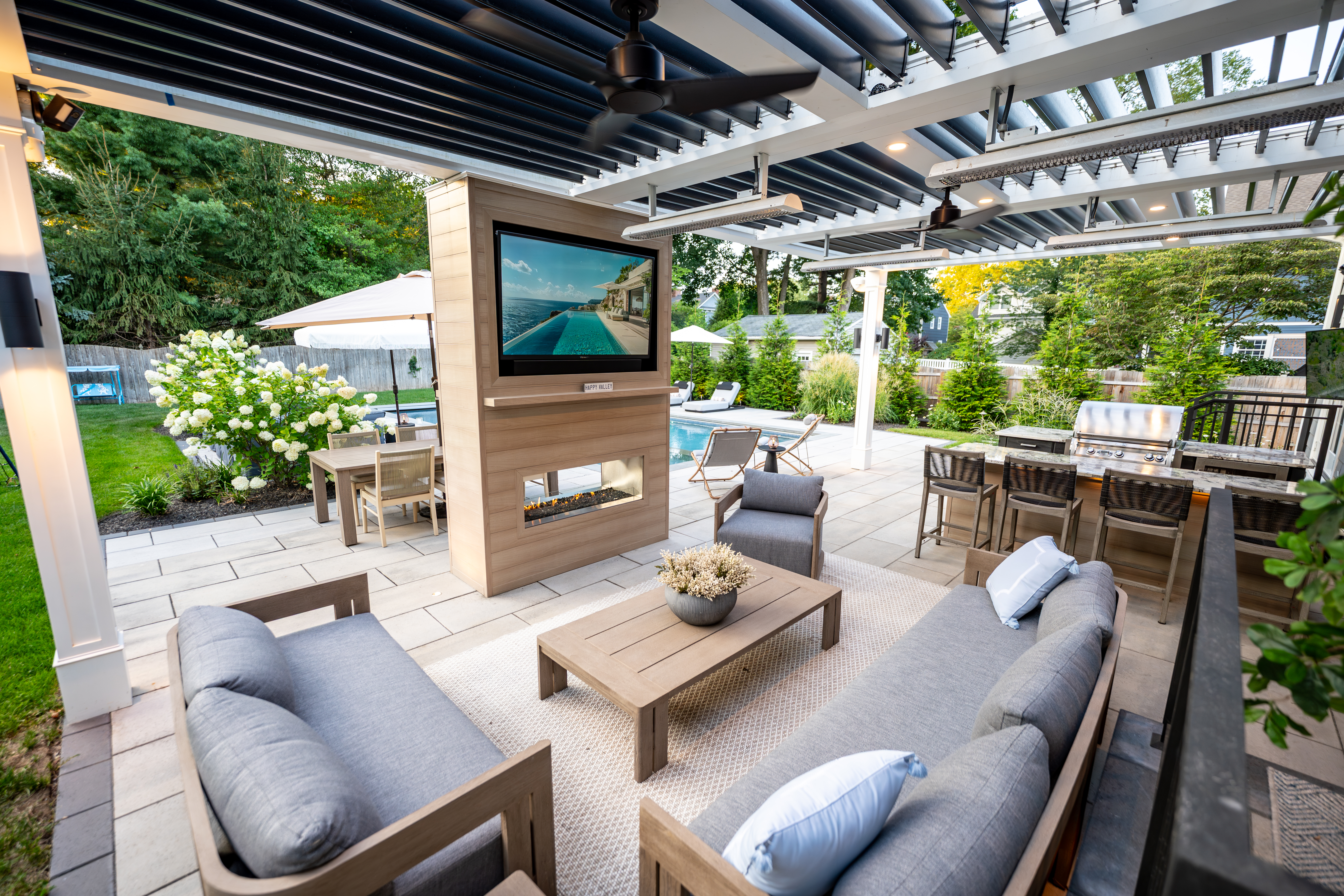
At its core, a multi-zone outdoor living space is exactly what it sounds like. Instead of treating your deck or patio as one open area, the space is intentionally divided into distinct sections, each designed for a specific use.
A helpful way to think about it is like an open-concept interior. Inside your home, the kitchen, dining area, and living room may all share the same general space, but each still has a clear purpose and layout. The same idea applies outdoors. The goal isn’t to separate everything completely, it’s to create definition so the space functions better.
That definition can come from a variety of design choices. Changes in elevation are one of the most effective, like stepping down into a lounge area or raising a dining space slightly above the rest of the deck. Layout plays a big role as well, with furniture placement naturally guiding how each area is used. Even subtle shifts in materials, like transitioning from wood decking to a bordered inlay or incorporating stone elements, can help signal that you’ve moved from one zone to another.
What makes this approach so effective in outdoor living space design is that it brings structure without sacrificing openness. You still get the feeling of a connected space, but each area has a clear role, which makes the entire layout feel more intentional and easier to use.
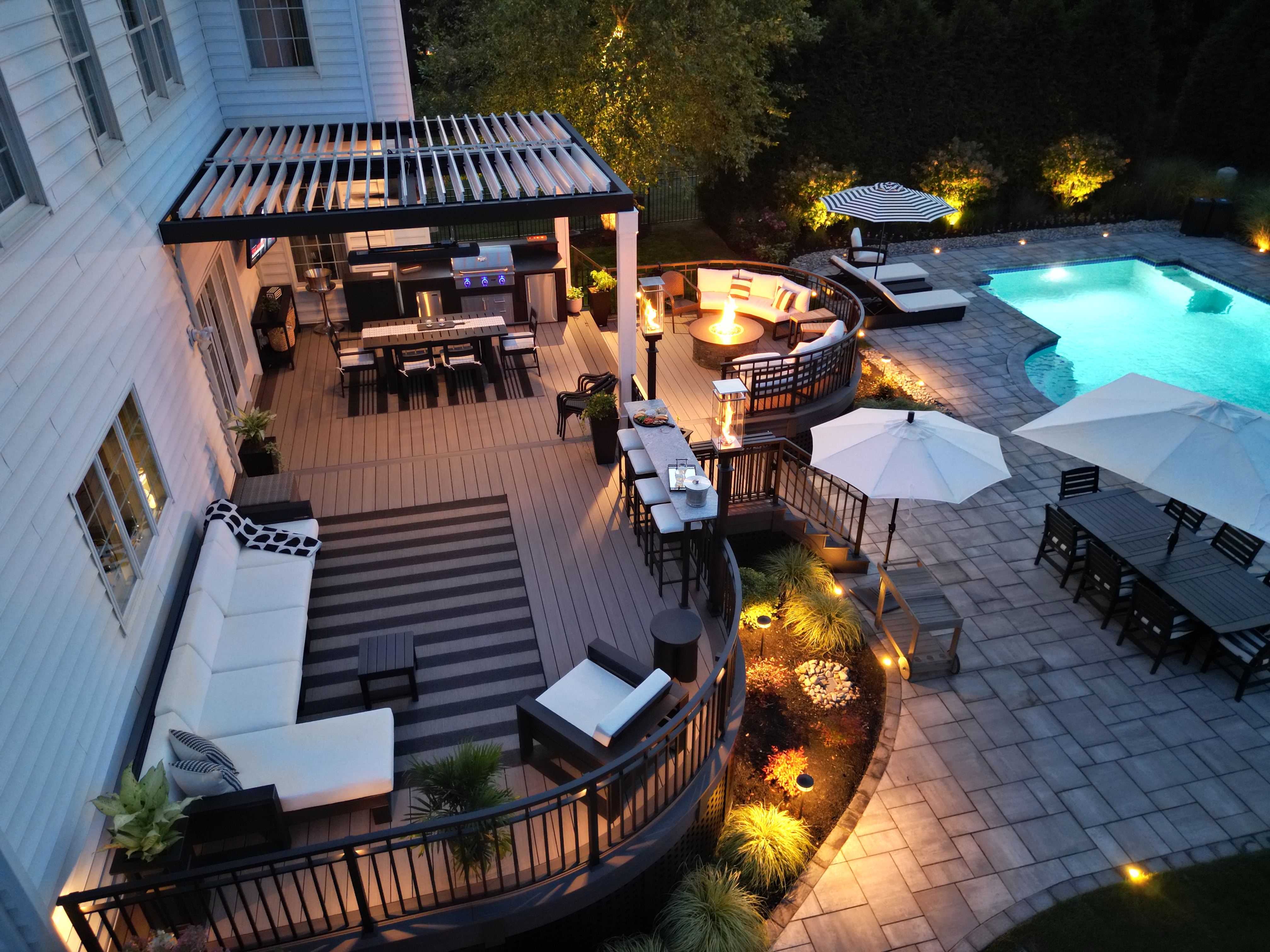
Once you start thinking about your backyard in terms of zones instead of one open space, the way it functions changes immediately. Everything has a place, and more importantly, everything works the way it’s supposed to.
One of the biggest improvements is functionality. When you have clearly defined outdoor living areas, you’re no longer trying to make one space do everything. Cooking, dining, and relaxing each have their own area, which means you’re not navigating around furniture or interrupting someone else’s activity just to use the space.
It also makes the entire layout more comfortable. In a single, undefined space, things tend to get crowded quickly. A dining table might feel too close to a seating area, or foot traffic cuts right through where people are trying to sit and unwind. A more thoughtful outdoor living space design avoids that by giving each zone enough room to breathe.
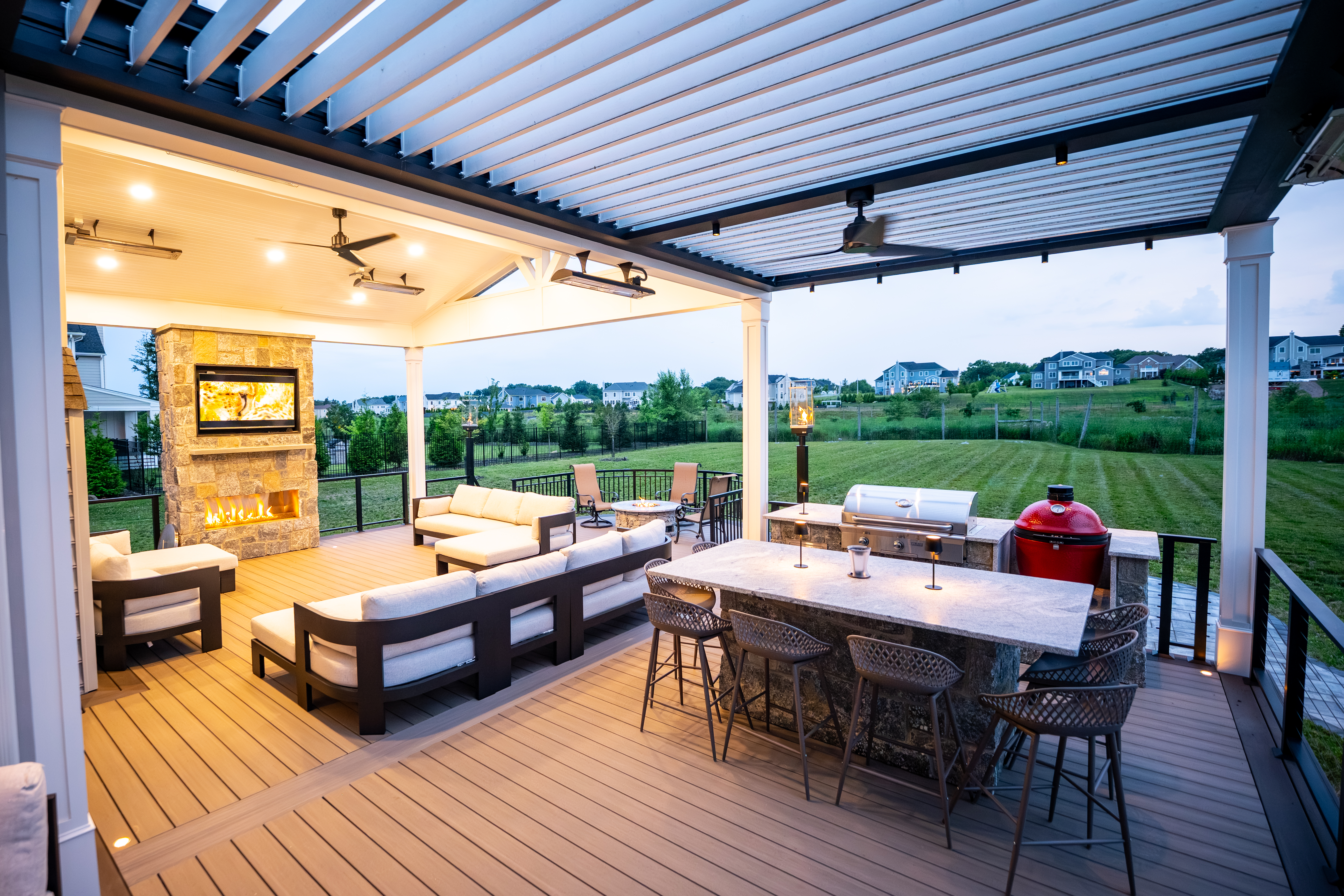
This becomes especially noticeable when you’re hosting. Instead of everyone gathering in one spot, people naturally spread out between the outdoor kitchen, dining area, and lounge space. The flow feels easier, and the space can handle more people without feeling overwhelmed.
There’s also a level of flexibility that comes with a well-planned layout. A lounge area might get the most use during the day, while a fire pit seating area becomes the focus at night. A dining space might be used for meals, but also for working outside or casual gatherings. When each zone is designed with a purpose, the space adapts more easily to how you actually live.
Over time, that kind of thoughtful layout doesn’t just improve day-to-day use, it also adds to the overall appeal of the home. A functional outdoor space feels more complete, more intentional, and ultimately more valuable than one that tries to do everything in a single, undefined area.
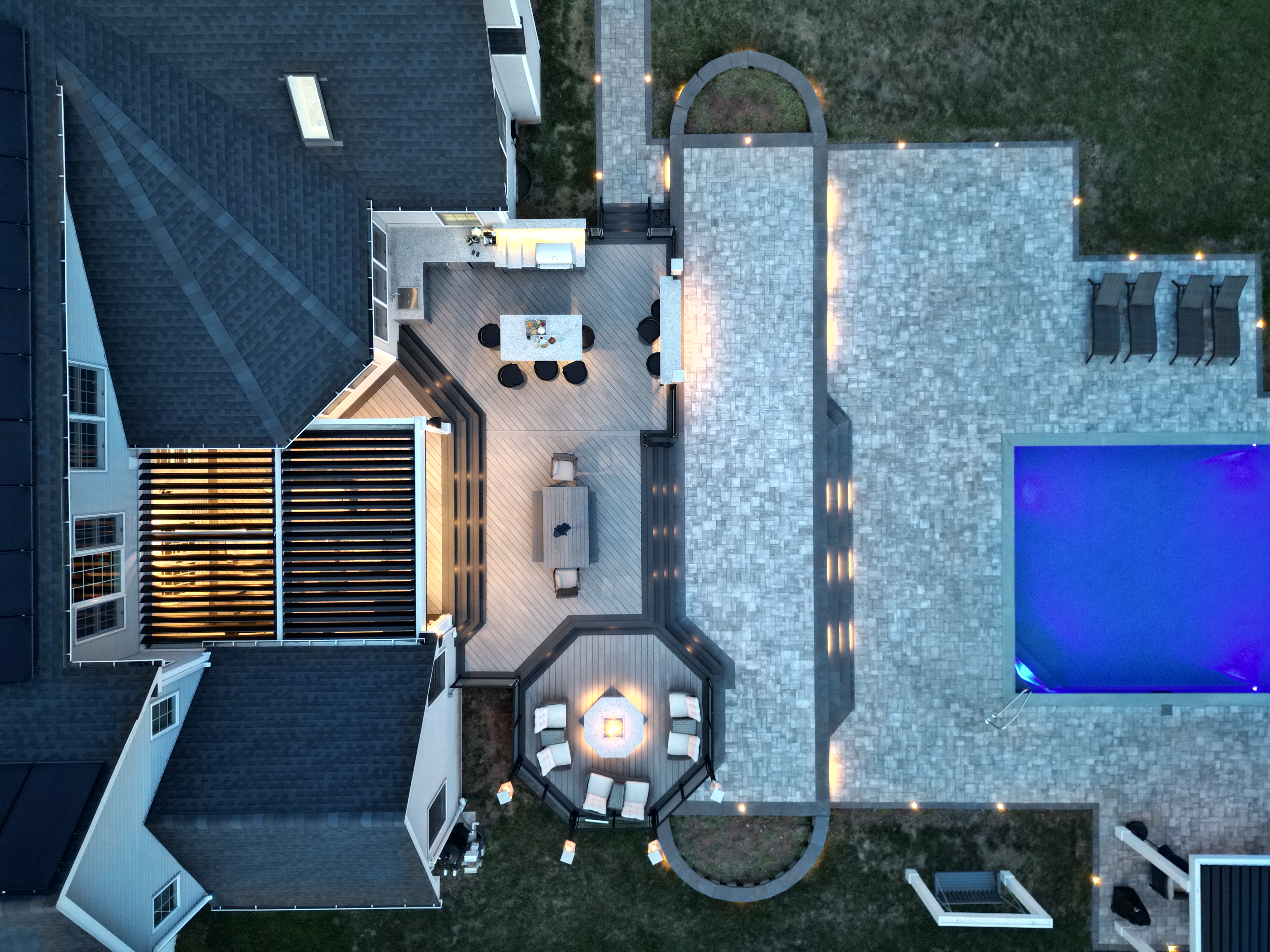
Once the layout is broken into zones, the next step is deciding what those zones actually are. Not every backyard needs everything, but most well-designed outdoor living spaces tend to revolve around a few core areas that cover how people naturally use the space.
These zones aren’t random additions. Each one serves a specific purpose, and when they’re planned together, they create a layout that feels balanced and easy to move through. Some spaces are more active, like cooking and dining, while others are built for slowing down and spending time.
The goal isn’t to pack in as many features as possible. It’s to choose the right combination of zones and give each one enough space to function properly. When that balance is right, the entire outdoor living space feels more comfortable, more usable, and a lot more intentional.
Below are four of the most common zones that define a well-designed backyard layout, each playing a different role in how the space comes together.
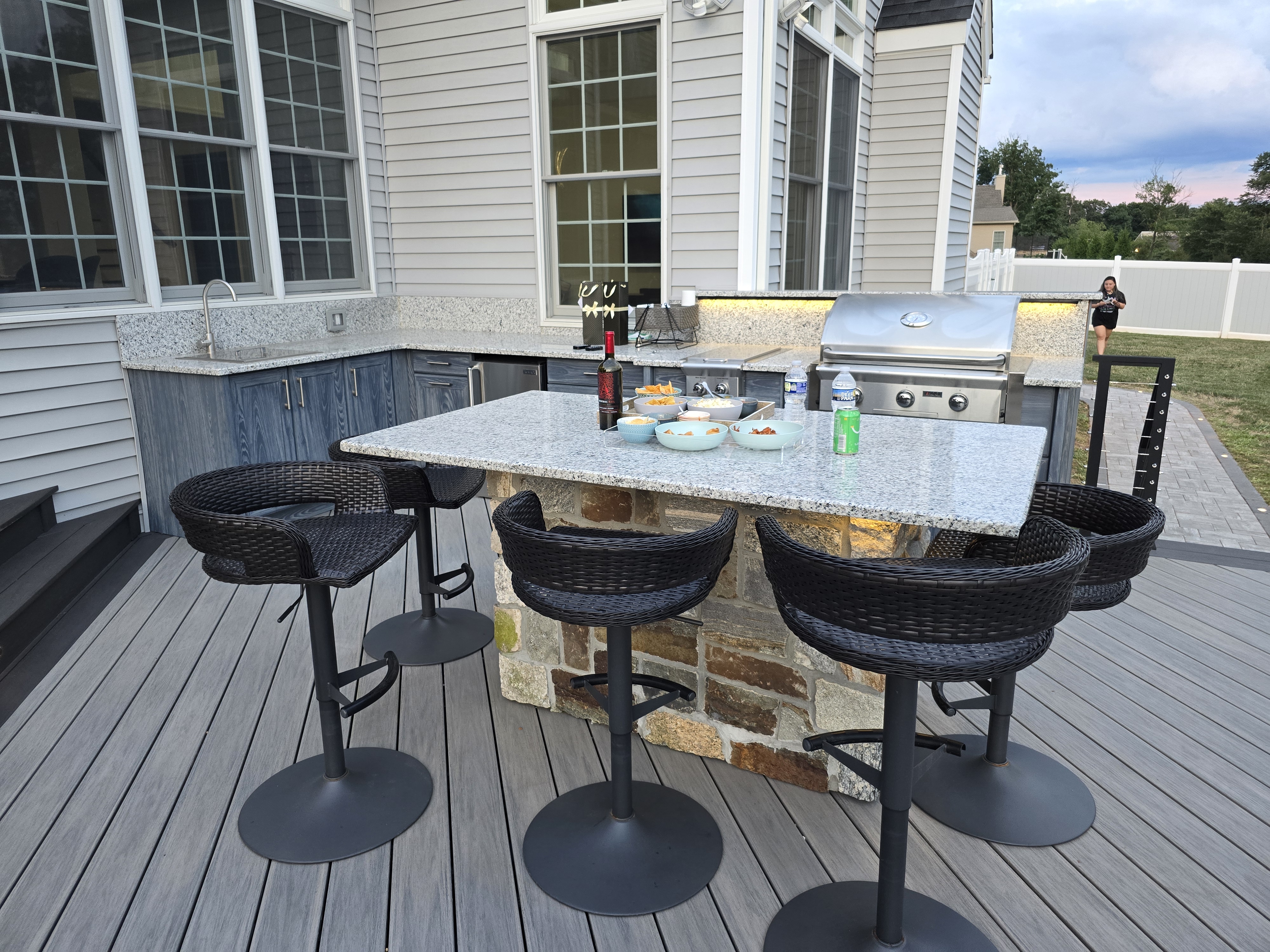
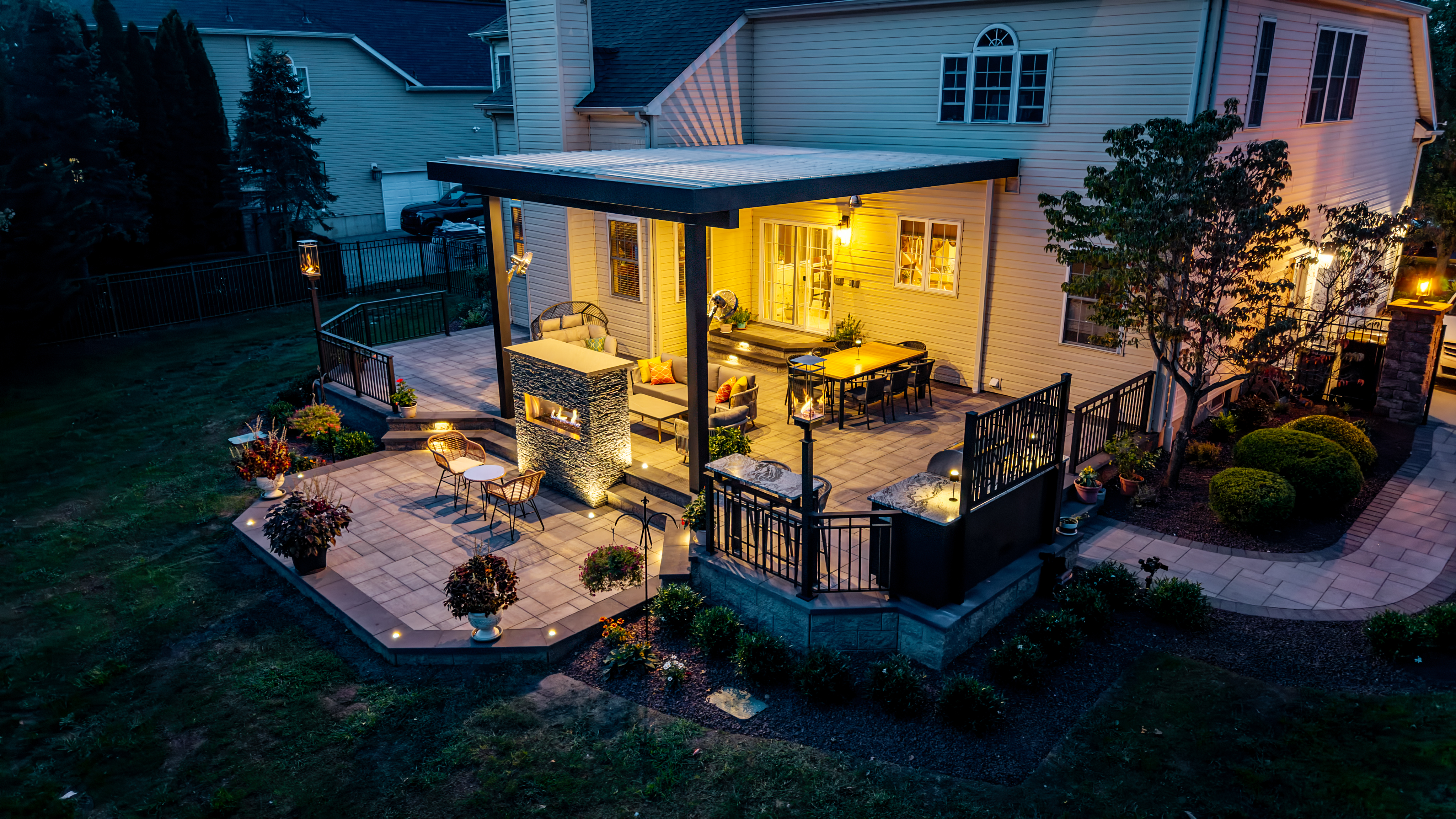
The outdoor kitchen is what anchors the entire space, giving the layout a clear focal point and making everything around it more functional. In this setup, the built-in grill, sink, and cabinetry create a fully usable cooking area, while the generous counter space makes it easy to prep and serve without feeling cramped.
The bar-height island adds another layer of usability by turning the kitchen into a social space, not just a place to cook. Seating at the counter keeps people connected, and its position allows it to support nearby dining and lounge areas without disrupting the overall flow of the outdoor living space.
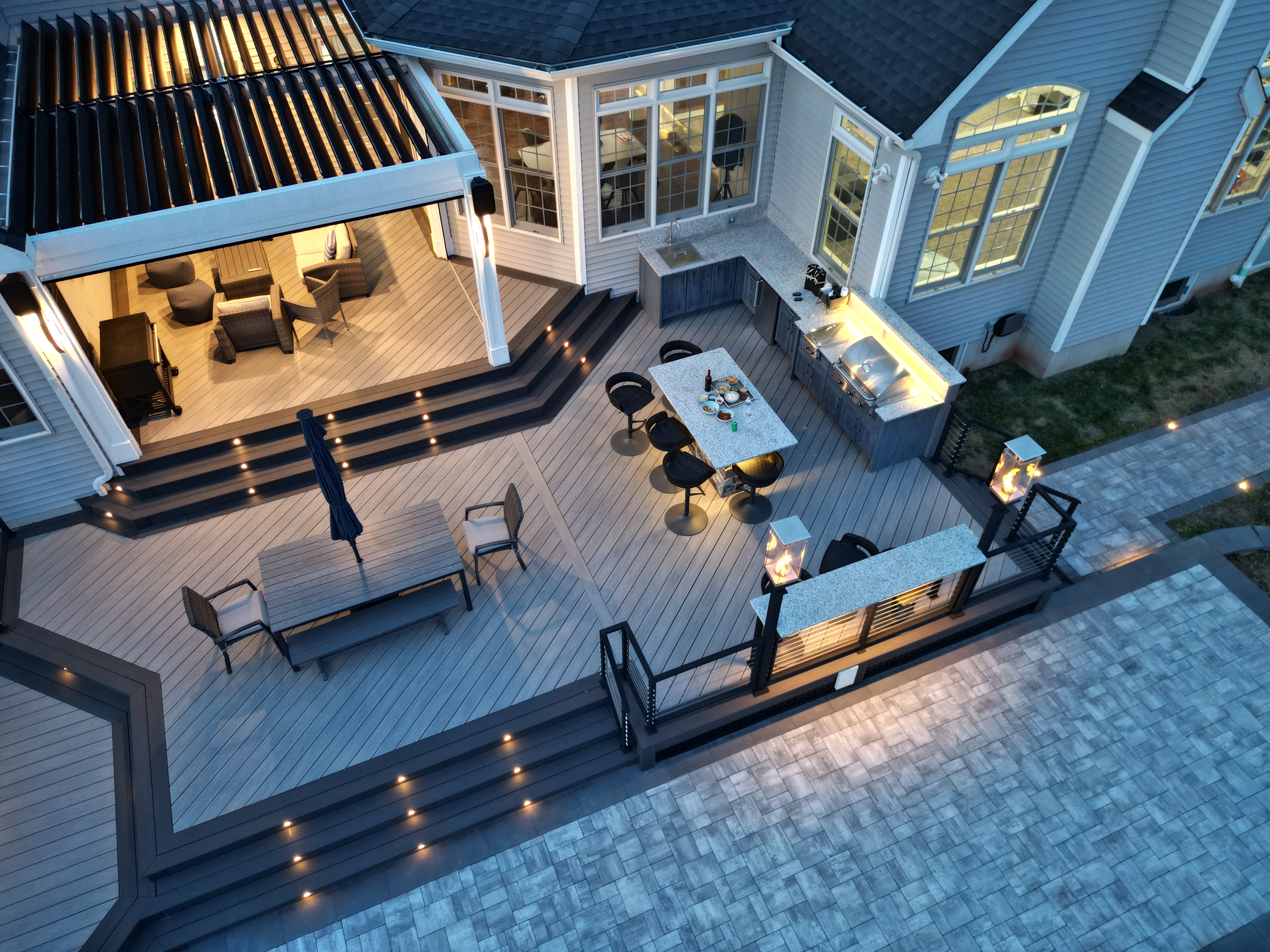
A dedicated outdoor dining area gives the space a clear place for meals, rather than trying to make it work wherever there’s room. Here, the dining table is centrally positioned on its own section of the deck, creating enough space to move around comfortably without interfering with other zones.
What makes this layout work is how naturally it connects to everything around it. It sits within easy reach of the outdoor kitchen while still feeling separate from the lounge and fire area, allowing it to function as its own space without breaking the overall flow of the outdoor living space.
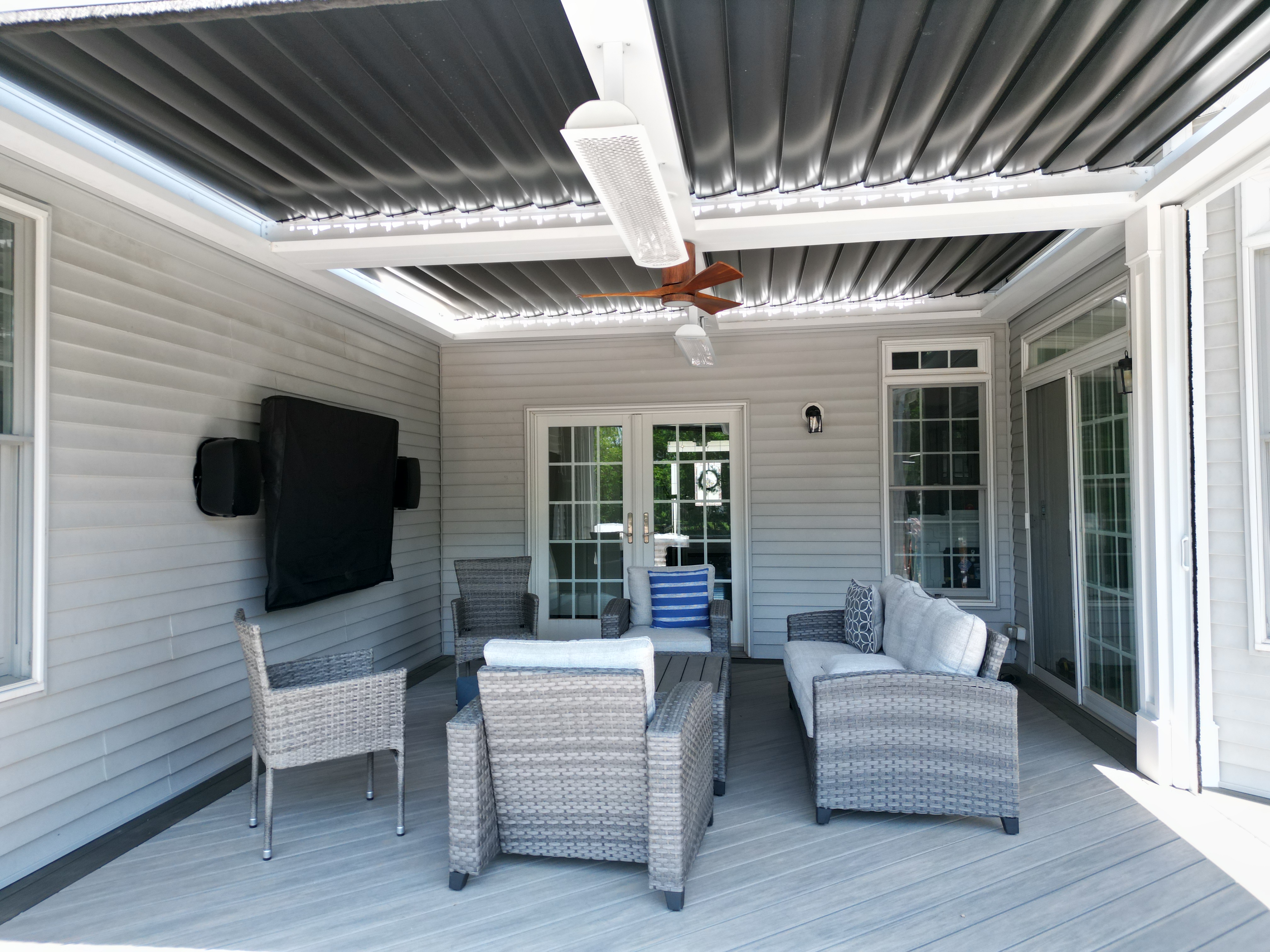
The lounge area is where the space shifts from functional to comfortable. Designed for conversation and downtime, this setup uses sofas and chairs arranged around a central table to create a space that feels inviting without being overcrowded.
With the added benefit of a covered structure overhead, this outdoor lounge becomes usable throughout more of the day. Shade, lighting, and overhead features like fans help control the environment, making it a space you can rely on consistently rather than only in ideal conditions.
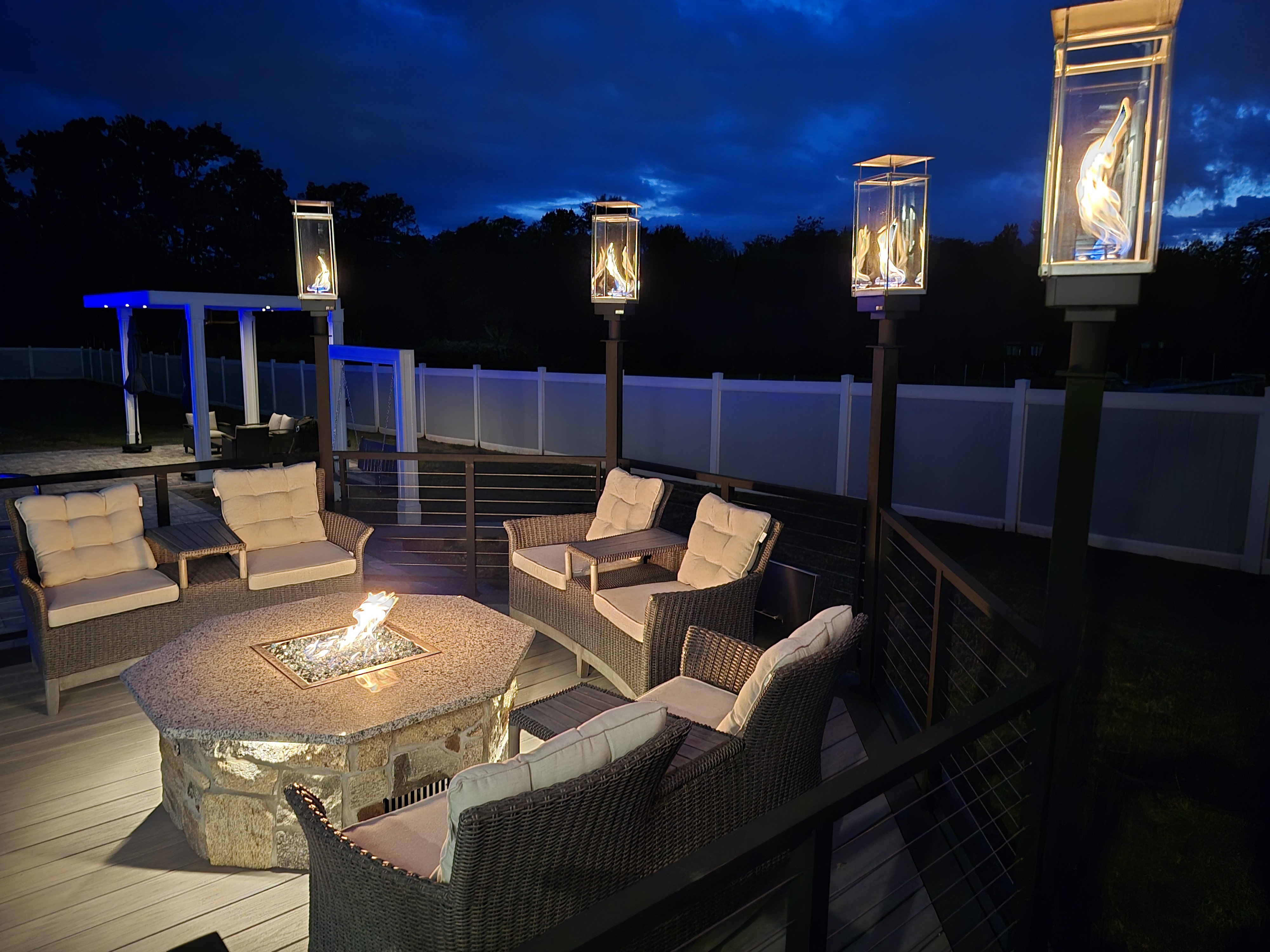
A fire feature creates a natural focal point that draws people in, especially as the day winds down. In this space, the fire pit is centered within a dedicated seating area, with chairs arranged to encourage conversation and make the most of the warmth.
Beyond the visual appeal, this zone extends how long the outdoor living space can be used. It turns the deck into a place people gather at night or during cooler weather, adding a layer of comfort and atmosphere that ties the entire layout together.
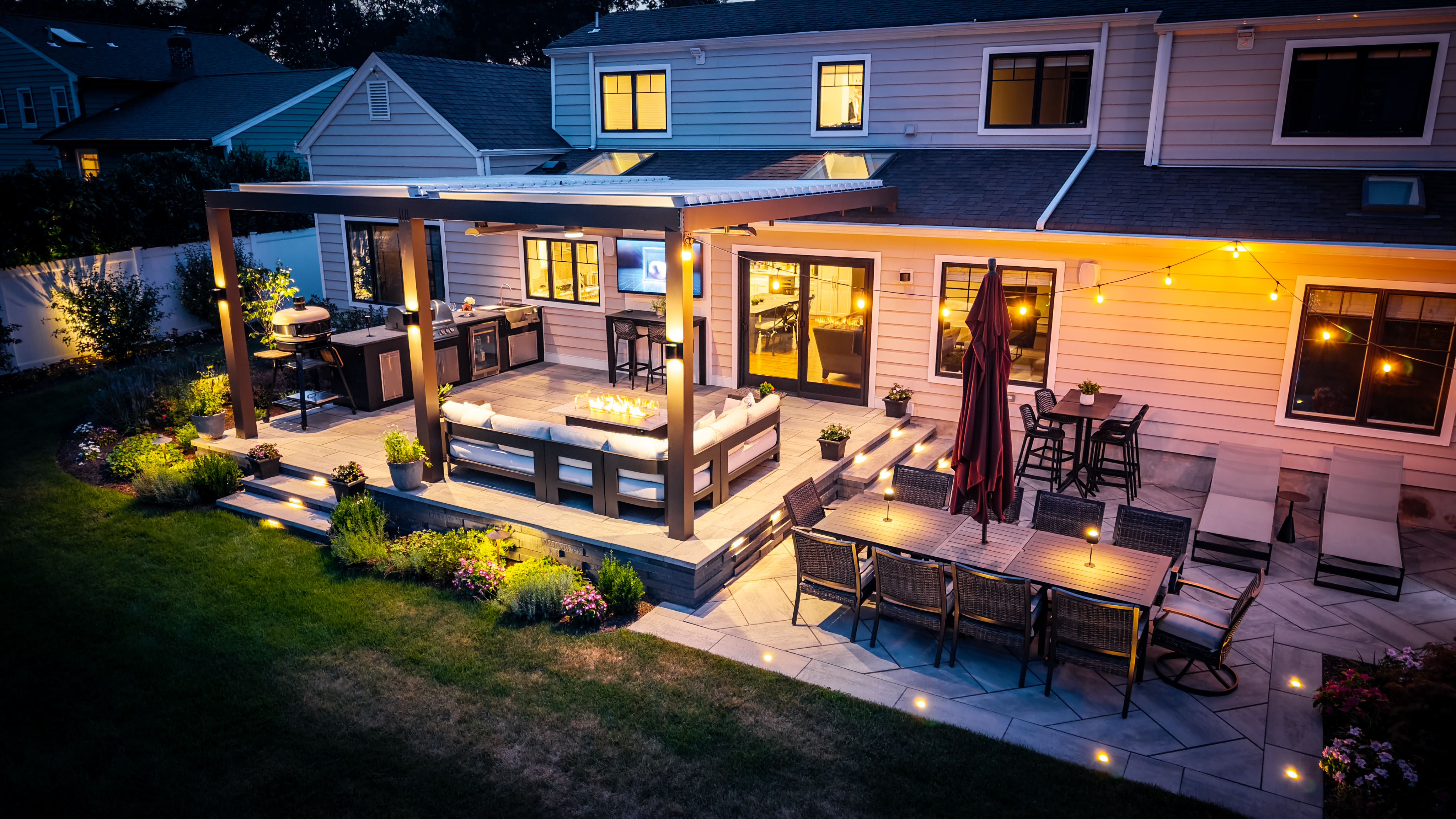
Once you start dividing a space into zones, the goal isn’t just separation. It’s making sure everything still feels connected. A well-designed outdoor living space should flow naturally from one area to the next without feeling disjointed or overcomplicated.
A big part of that comes down to consistency. Using the same decking material throughout, repeating colors in furniture or finishes, and keeping a cohesive design language helps tie everything together visually. Even when zones serve different purposes, they should still feel like they belong to the same overall space.
Layout also plays a major role. The positioning of each zone should feel intuitive, with clear paths between them that don’t interrupt how the space is used. Subtle changes like elevation shifts, built-in features, or railing lines can define areas without cutting them off from each other.
This is where thoughtful planning makes the biggest difference. When a multi-zone outdoor living space is designed from the start as a complete layout, everything works together more naturally. It avoids the pieced-together feel that often happens when features are added over time, and results in a space that feels intentional from the moment you step into it.
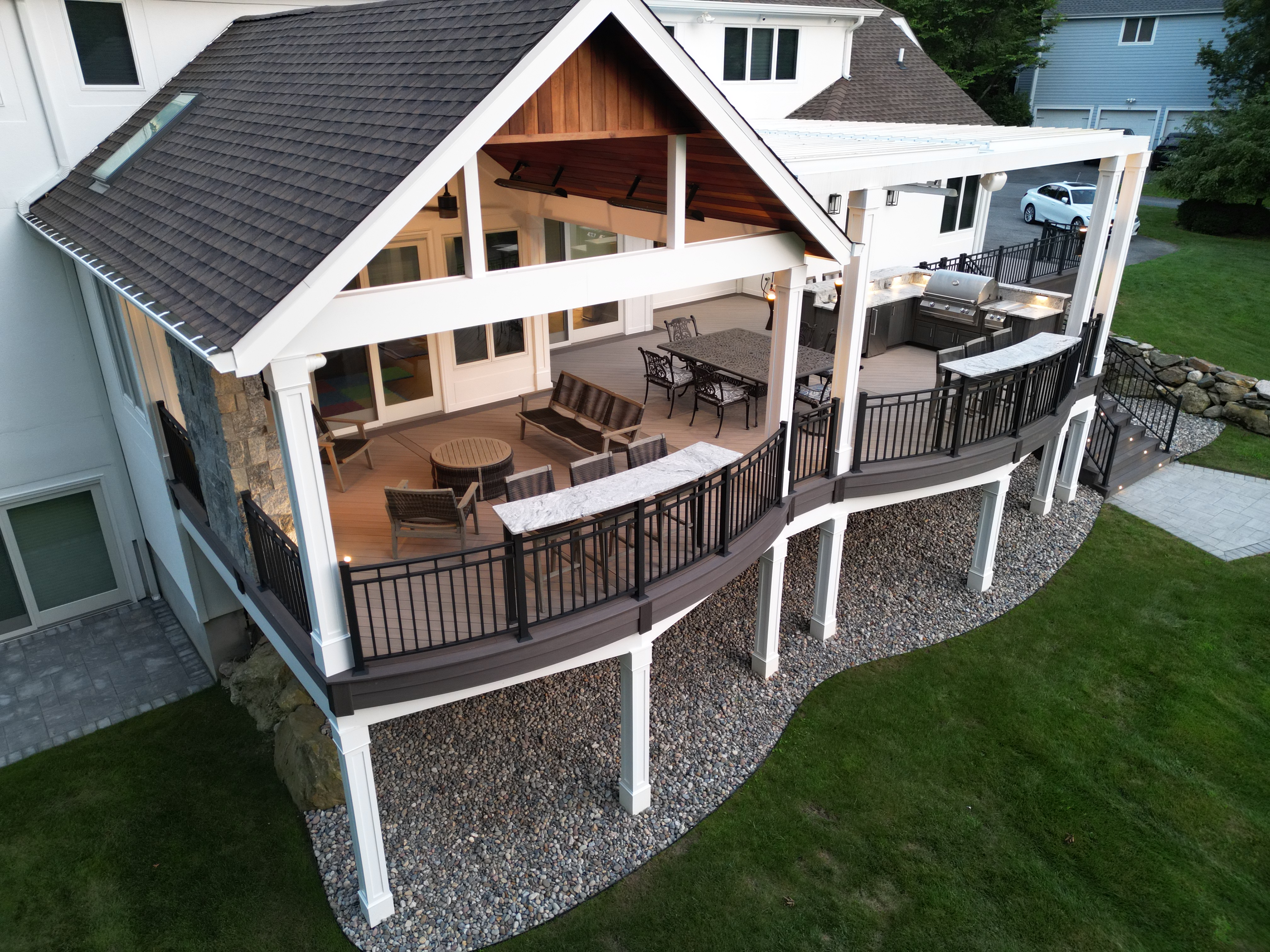
A well-designed outdoor space isn’t just about adding features. It’s about organizing the space in a way that makes everyday use feel easy. When each area has a clear purpose, everything starts to function better, from quiet mornings outside to hosting a full group in the evening.
That’s what makes a multi-zone outdoor living space so effective. It brings structure without sacrificing openness, allowing different parts of the space to work together instead of competing with each other.
When it’s planned thoughtfully from the start, the result is a backyard that feels natural to use, not something you have to work around. And that’s ultimately what turns a deck or patio into a space you actually spend time in.
If you’re thinking about upgrading your outdoor space, the layout matters just as much as the features you include. A well-designed plan brings everything together so your space feels cohesive, functional, and easy to use from day one.
At Deck Remodelers, we design and build outdoor living spaces with that bigger picture in mind. From the first concept through construction, every detail is planned to make sure your space not only looks great, but actually works for how you live. If you’re ready to start planning a multi-zone outdoor living space, we’d love to help you bring it to life.